BLOG: What is AdBlue and why do we need it?
If your diesel car is only a couple of years old, you might have noticed a second filler cap next to the main diesel filler.
What is AdBlue and why do we need it?
Vehicle manufacturers are bound by strict regulations brought in by environmental concerns. The Euro 6 emissions standard came into force in 2016 and affected diesel cars the most. To comply with the new rules, car makers have had to focus on bringing harmful nitrogen-oxide emissions down to a minimum.
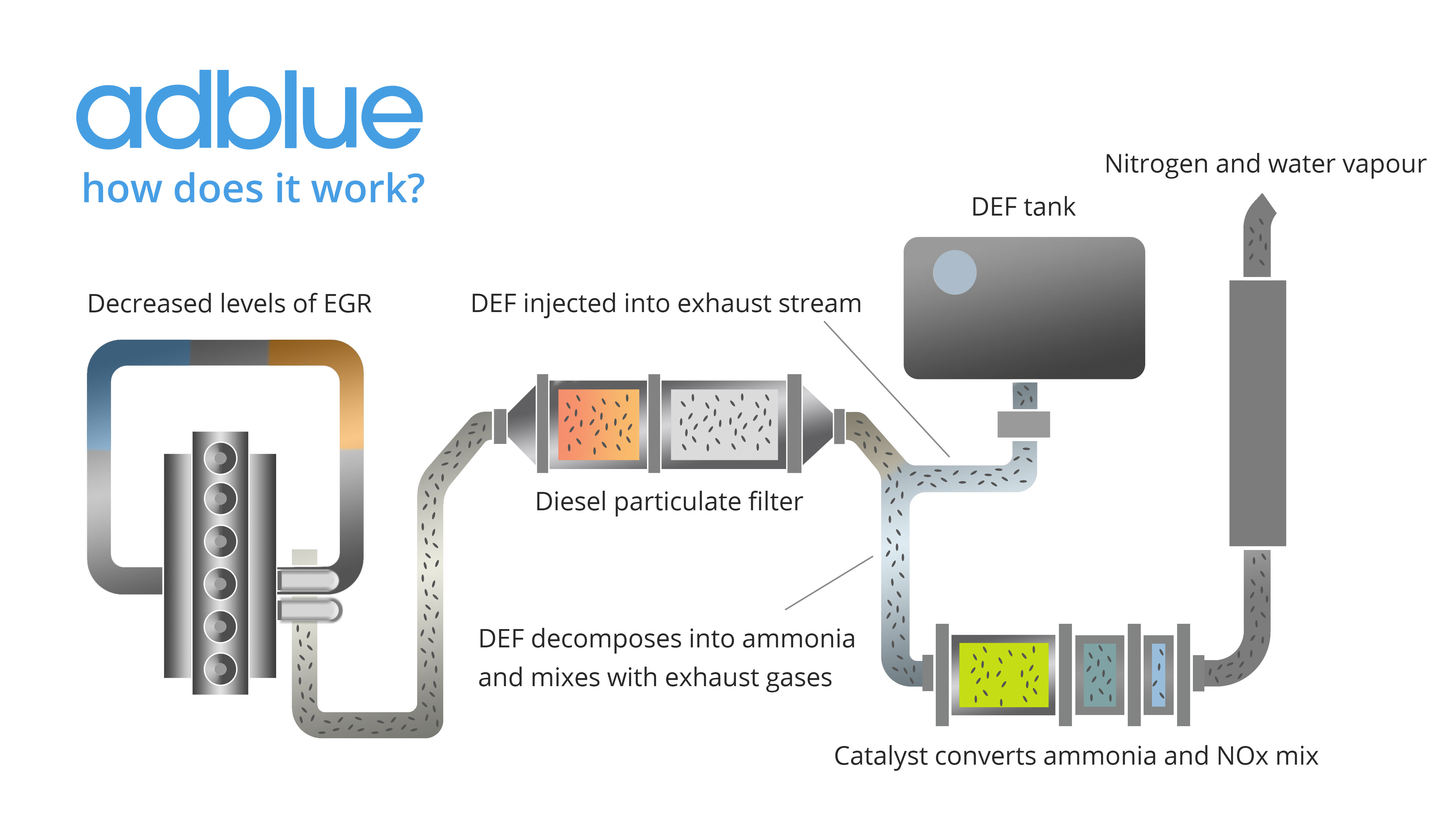
The introduction of a technology known as ‘selective catalytic reduction' (SCR) has proven to be an extremely effective way of bringing diesel engines up to the standard required to meet Euro 6. An SCR system uses a solution of urea and water, injected in tiny amounts into vehicle exhaust gases. Most Mercedes cars that display the BlueTEC badge and all Citroen BlueHDi models use AdBlue in conjunction with SCR technology.
How does is work?
AdBlue is a liquid that's colourless in appearance and is a solution of water and urea. To comply with Euro 6, recent diesel-powered cars use SCR technology to inject microscopic quantities of this liquid into the flow of exhaust gases. When the urea and water solution combines with exhaust emissions, it produces nitrogen and oxygen – harmless gases that occur naturally in the environment – by breaking down mono-nitrogen oxides (gases that can be harmful and are found particularly in the fumes from diesel exhausts).
This technology has been used in buses and heavy lorries for a long time, so its effectiveness has been proven and its reliability is better than ever.
Does my car use it?
SCR technology with AdBlue is becoming more and more common, but isn't fitted to every diesel car yet, but we're expecting to see more and more in the coming years. The newer your car, the more likely it is that it uses the AdBlue system to reduce its emissions. Many people are unaware the system is installed until a warning message appears on the dashboard announcing the AdBlue tank needs replenishing.
If you're in doubt as to the presence of an SCR system that requires AdBlue, the owner's handbook for your car will help. You can check it for the location of the AdBlue filler cap – if one isn't listed, it can be assumed that SCR was never fitted to your model of car. If it does provide a location for the AdBlue filler, check that location on your car for its presence. Where fitted, it's commonly beside the fuel filler, but some cars have it concealed by the boot carpet, either on the floor or at either side.
How to refill it?
If you cover more miles than most, you may find you need to refill your AdBlue tank in between services. While you'll be reminded in plenty of time to do this by messages on the dashboard, be warned though, failing to refill the AdBlue tank before it runs completely dry will cause your vehicle to completely stop working and could lead to some serious damage being caused to the engine leading to a pretty hefty repair bill that creeps up into the thousands.
Topping up with AdBlue is a simple affair. It's always a good idea to consult your car's handbook first, but typically all you need to do is open the AdBlue filler cap, screw on the connecter of the refill bottle, then let the AdBlue drain into the tank. Many larger refill containers require a connecting nozzle, and you may want to buy one of these from a dealer if you're a high-mileage driver, as larger refills can save you money in the long run.
As with any vehicle fluid (including anti-freeze and brake fluid), AdBlue will eventually naturally run out over time. While it's more than likely that it'll be replaced before this happens, you should receive a dashboard warning message if this occurs.
Although it's non-toxic, AdBlue is corrosive and can cause irritation to your skin, eyes and lungs, so do wash your hands after filling. Be sure to rinse any spills from the car's bodywork too, because AdBlue can damage paintwork.
How much of it will my car use?
AdBlue consumption varies from vehicle to vehicle, but Volkswagen estimates a Passat will get through about 1.5 litres every 620 miles, for example. Much like fuel consumption, though, the harder and faster you drive, the more AdBlue you'll use.
Fortunately, because AdBlue is injected into the exhaust gases in such small quantities, you shouldn't find yourself topping up too often. With most AdBlue tanks holding around 10 litres or more, many drivers will find AdBlue refills taken care of during their car's annual service.
Should I keep some extra in my boot?
We'd advise against doing this, as any spills or leaks are likely to damage your car's interior. It's also worth knowing that you can't keep a half-empty container of AdBlue in your garage if you have some left over after topping up, as airborne contaminants can affect the chemical composition of AdBlue, rendering it unusable.
How much is it?
You can buy AdBlue refill bottles from your dealers for about £1.50 a litre, and it's also sold by motoring shops as well as online retailers. In most cases, AdBlue classed as a consumable (like fuel & oil), so it's down to you to cover the cost even with a maintenance package.
If you've purchased a diesel vehicle from us and are unsure if your vehicle requires AdBlue, please don't hesitate to contact us and we will be happy to advise.