BLOG: Highest form of flattery? Look at China's cheekiest car copies
People say that Imitation is the highest form of flattery, but what about when it comes car manufacturers, surely the legal teams of major car brands will disagree.
China has one of the biggest markets for upmarket European cars. Internationally recognised brands such as Mercedes, BMW and Audi are experiencing huge success in the China and growth shows little sign of stopping.
In 2016 almost 25 million buyers took a new car home, many of which were built by Chinese production lines that we're familiar with, such as Honda and Ford. However, rather than creating rivals to the most desirable western cars, some manufacturers have taken to imitating them instead.
Of course, these resemblances are entirely deliberate. Many of these cars look similar to their Western counterparts but can be sold at a much lower price to suit the cash-strapped Chinese buyers. The lower price means that build quality, technology and safety are often less sophisticated than their western model twins, which typically hit the market after a more extensive development programme.
Look for yourself at the most obvious examples of Chinese copycat car design, and the European and American cars that ‘inspired' them.
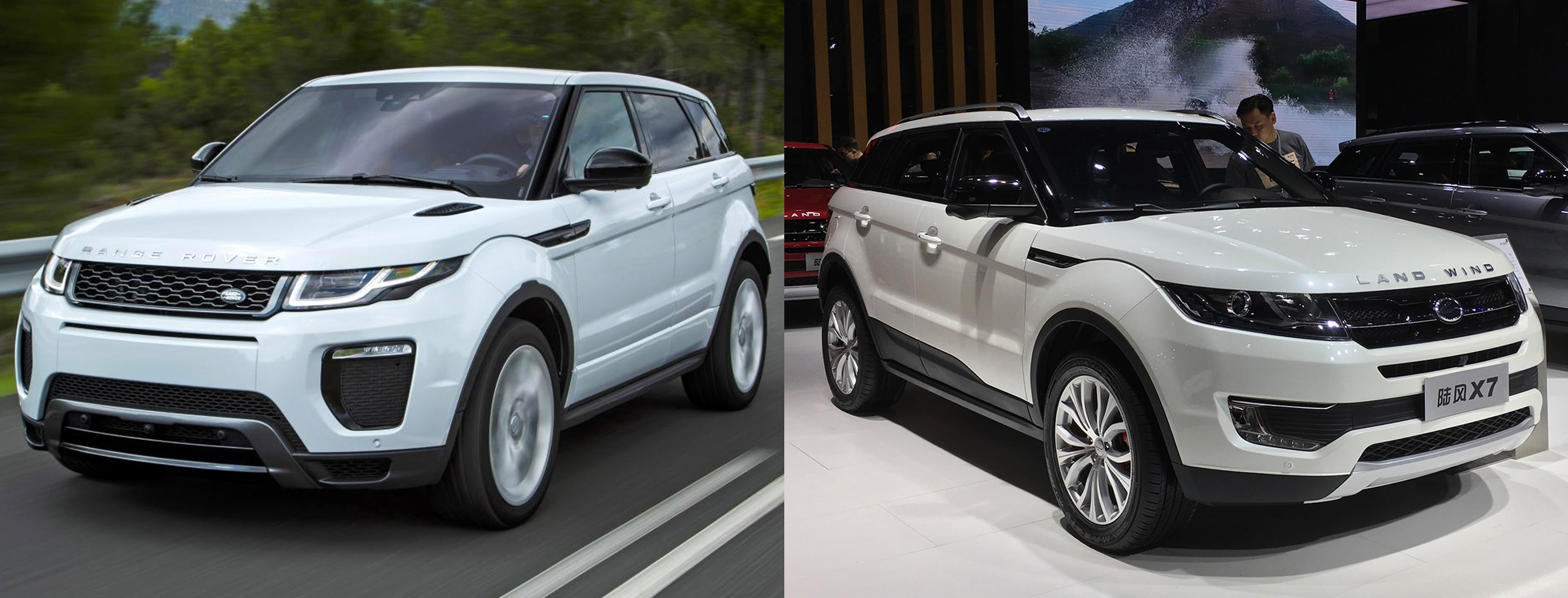
LandWind X7 and Range Rover Evoque
The LandWind X7 is notorious for being one of the most conspicuous examples of Chinese imitation. It's impossible not to spot the design similarities between the X7 and the Range Rover Evoque, even down to the positioning of the LAND WIND lettering on the bonnet. This has caused considerable anger from Jaguar Land Rover, maker of the Evoque, particularly as the X7 sells locally for around £14,000, undercutting the imported Evoque on the Chinese market by £35,000. The X7 is actually a larger car than the Evoque, but as convincing as it looks on the outside, its interior and general quality is a far cry from that of the British-built original, while the engine is a Mitsubishi design.
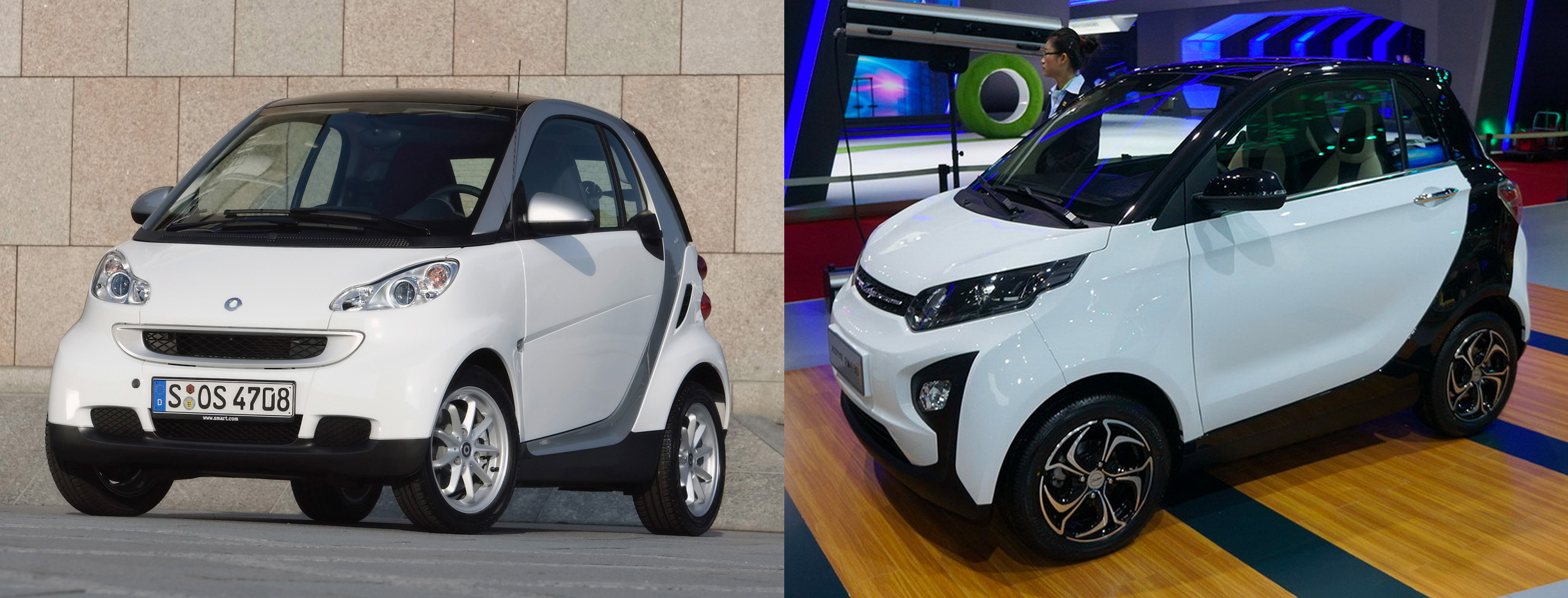
Zotye E30 and. Smart ForTwo
The 2015 Shanghai Auto Show was positively heaving with small electric cars and the Zotye E30 was one of the most widely discussed. Its resemblance to the Smart ForTwo is immediately apparent – although the Zotye is markedly smaller than the German original, its body shares the look of the Smart's individually painted Tridion safety cell and wheel-in-each-corner layout. With a driving range of around 93 miles and a top speed of almost 50mph, the Zotye is no Tesla, although it does imitate the Model S' large centrally mounted tablet-style control screen.
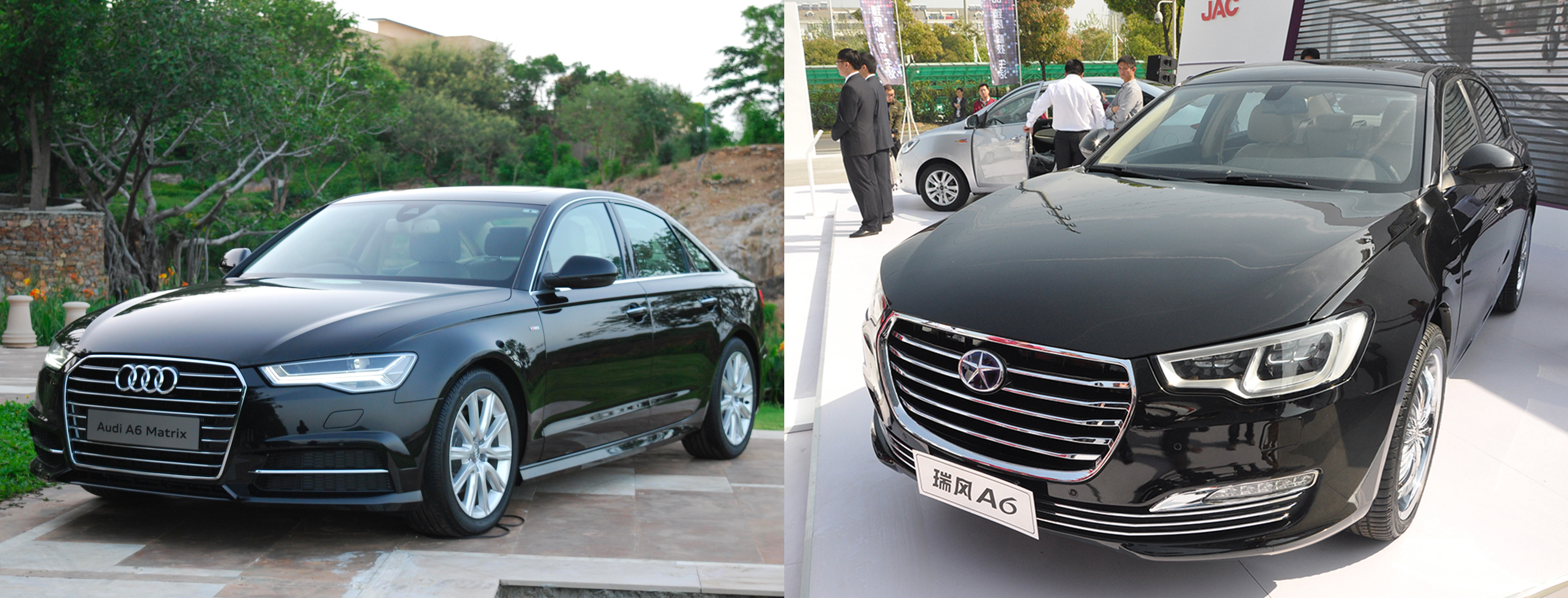
JAC A6 and Audi A6
It's one thing to imitate the looks of a car, but quite another to steal its name as well. Yet this is exactly what JAC did with its Audi A6-inspired large executive car, which is also named the A6. Its external resemblance to the German car is striking, particularly around the grille and headlamps, which are near identical but for the badge. Inside, though, any similarities end and the JAC car exhibits a rather less Germanic look with a dashboard that's more Aldi than Audi.
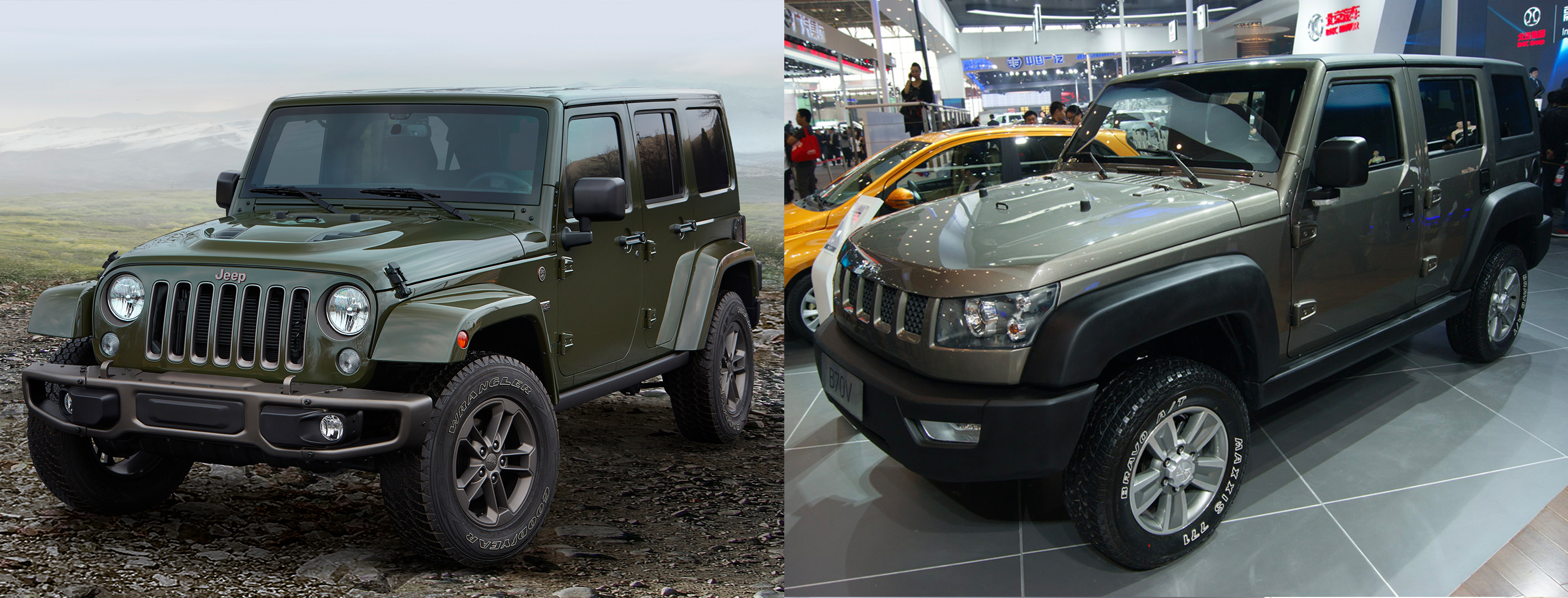
BAIC X424 and Jeep Wrangler
In designing the X424, BAIC seems to have distilled the characteristics of an entire brand into one impenetrably named SUV. You can see all manner of Jeep style references in the X424, starting with the previous-generation Cherokee around the headlamps and grille, and continuing along flanks that closely resemble those of the long-wheelbase Wrangler, complete with exposed door hinges.
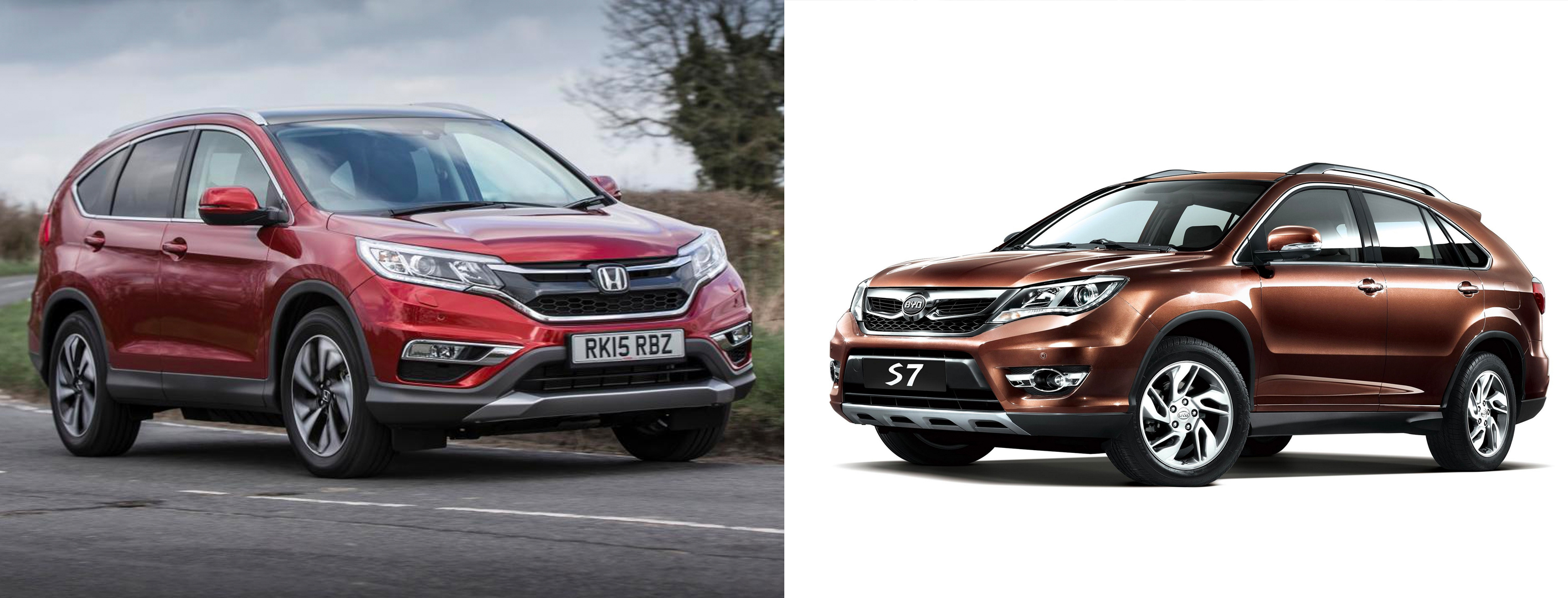
BYD S7 and Honda CR-V
Here's another example of the imitation being virtually indistinguishable from the car that inspired it. Every external feature seems to have been reproduced in minute detail, which is no doubt very flattering to Honda's designers, although its marketing team is likely to be rather more alarmed by this cut-price imposter. As with most cars in this list, though, it seems that an authentic look is more important outside than in, where the BYD car is rather different to its Japanese progenitor. There's a traditional floor-mounted gearstick rather than the Honda's dash-mounted item and the CR-V's split-level dashboard design is nowhere to be seen.
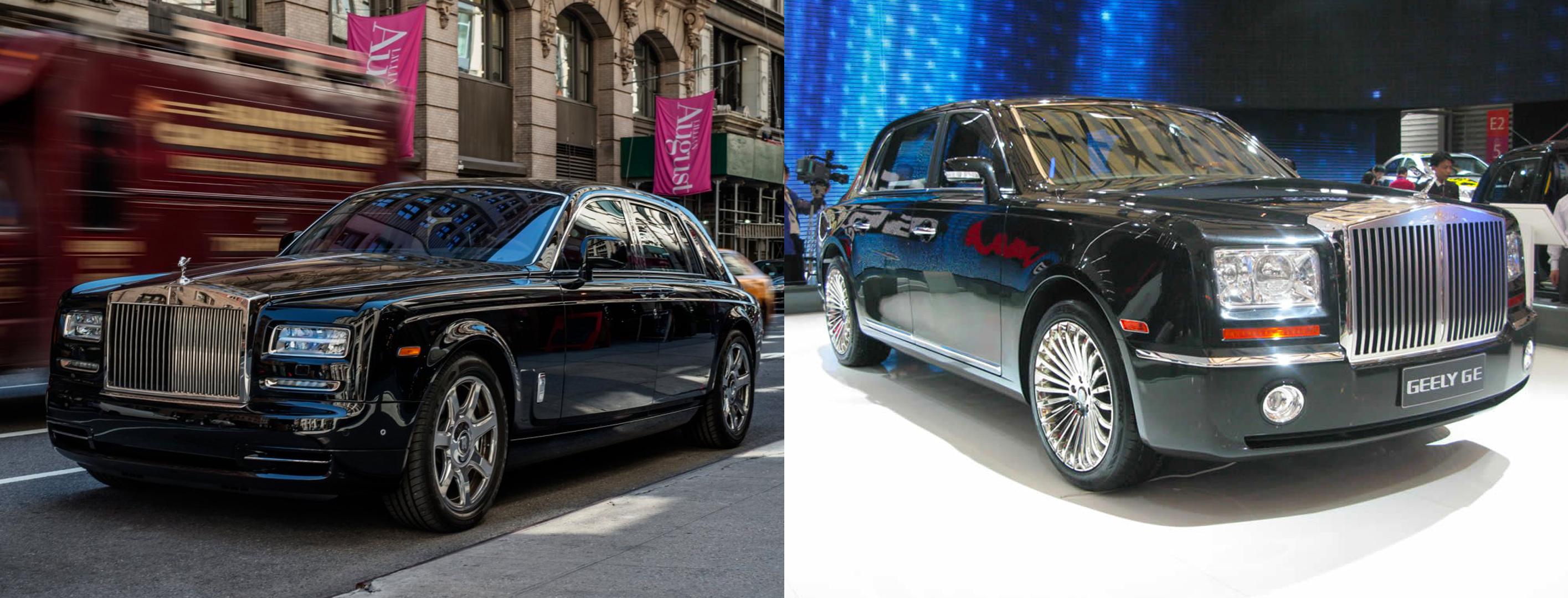
Geely GE and Rolls-Royce Phantom
When a car is as game-changing as the Rolls Royce Phantom was when it first stunned onlookers back in 2003, it's hardly surprising that it should influence the future designs of other luxury car makers as they rush to catch up. In the case of the Geely GE, it's the proportions that must have struck a chord with the designers more than anything else. Of course, what a car with this much gravitas really needs is a distinctive grille to really set it off – so Geely has employed one that's a dead ringer for the Phantom's. But did the company really have to take the Spirit of Ecstasy emblem, too?
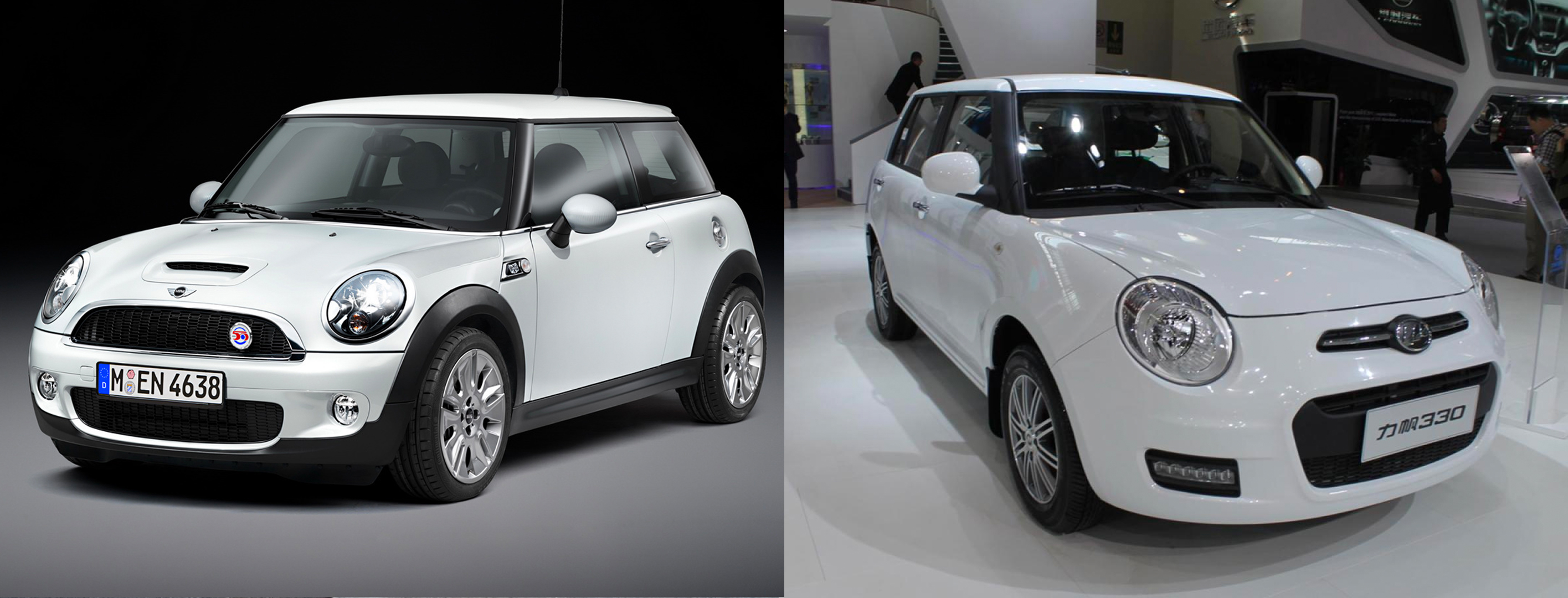
Lifan 330 and MINI
The Lifan 330 isn't actually a slavish reproduction of a famous European car design, but it does pastiche the second-generation MINI – and other iconic European cars such as the Fiat 500 – in rather too many ways to be seen as an entirely independent design. Unusually, although the headlamps, ‘floating' roof and rear light positioning recall the MINI on the outside, the similarities are actually acuter inside, right down to the design of the door trims and the way the stereo is housed in a circular pod reminiscent of the MINI ‘central instrument'. The Lifan 330 website even says "Three-spoke sports steering wheel design and mini-style leather are more fashionable and classic", which is pretty brazen by anyone's standards.
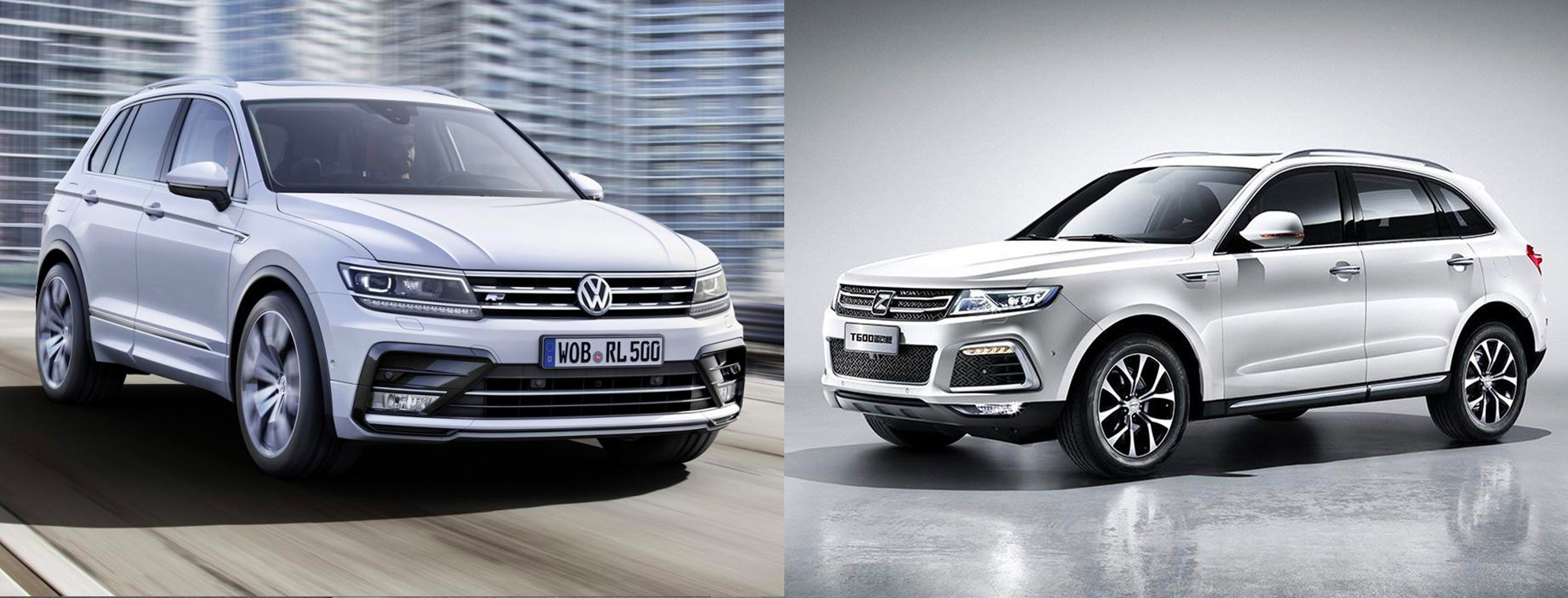
Zotye T600 and Volkswagen Tiguan
There's little denying that the Zotye T600 looks extremely similar to the Volkswagen Tiguan, right down to its nose styling that closely follows VW's very latest corporate design language. The similarities are less marked at the rear and dissolve further when you sit inside. However, a Sport model adds another level of intrigue to the interior – there are a VW-style driver-configurable dashboard instrument display and a rotary gear selector that rises from the centre console in the style of that used by Jaguar and Land Rover. Power is from a 1.5 or 2.0-litre turbocharged petrol engine – not believed to be related to the Volkswagen engines of the same size.