
Speed Cameras are there for good reason, to enforce the speed laws on the road. But when your foot gets a little trigger happy on the pedal, what do you need to be looking out for?
To make sure you're less likely to get caught out like a deer in headlights, here's a list of all the different cameras you should look out for. That way you won't get slapped with a fine when your accelerator foot gets a little bit too trigger happy.
Traffic cameras
These are simply CCTV cameras monitored by Highways England and used strictly to monitor traffic, not to issue speeding fines (Don't worry, you're safe).
They'll alert the Highways England if there's an incident or congestion on the motorway, so that emergency services can be sent out if required – and local and online media can issue warnings.
Visually, they look like ordinary CCTV cameras. They're mounted in tall poles or overhead gantries. As they're merely used for capturing footage and not for detecting speed, these cameras are not painted in yellow but just boring old grey and white.
Legacy cameras – Gatso
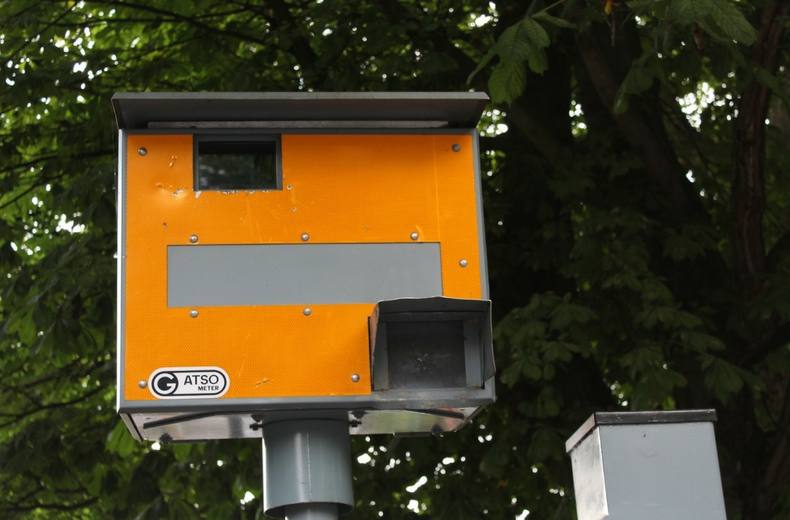
Sticking out like a bulky yellow sour thumb, Gatso cameras are the most common type of speed camera. They're the ones you see and promptly slow down in order to avoid the 'say cheese' motor flash. They are usually found on the side of roads in the UK, but they were also used on overhead gantries on motorways.
Commonly, many motorway Gatso systems have been replaced by HADECS 3 technology (we'll get on to that later) although the distinctive yellow-marked housing remain on many motorway overhead gantries – as do the tell-tale ‘line' markings on the carriageway.
As the ‘dummy' boxes and lines are still a visual deterrent to speeding, there is little incentive to remove them. HADECS 3 systems are frequently positioned in the same locations as legacy Gatso cameras. However, the tell-tale flash will thus come from the side of the motorway, rather than overhead.
The National Police Chiefs Council recommends the minimum speed for prosecution is 10 per cent plus 2mph over the limit, but this is not part of official legislation, this is only advice given to officers to aid them in their discretion on whether or not to prosecute. Fixed speed cameras have a set trigger for catching people speeding, however, it is unconfirmed what most are set at so it's not worth gambling and assuming they give you 10% or more.
Mobile cameras
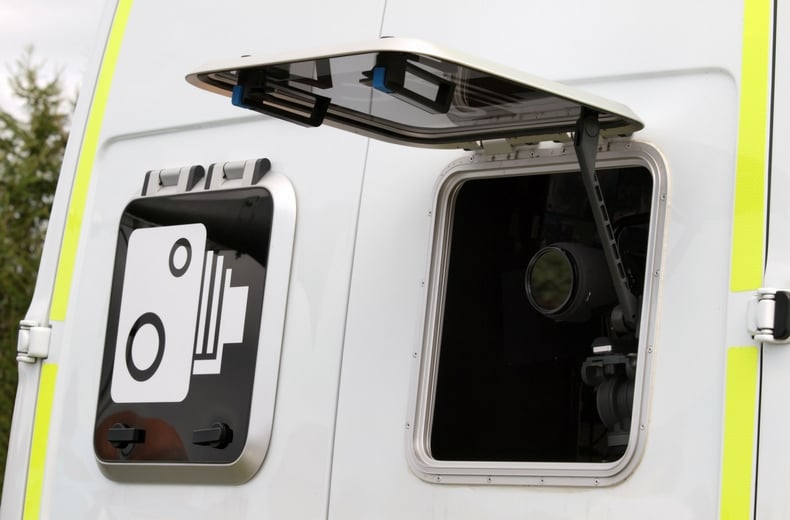
Widely considered as the most distinctive speed cameras, mobile cameras are sure fire way to trigger an anxious foot shuffle over the break in order to slow down before the police can fist pump and say "Gotcha!". Often, a police car or van will be parked on a bridge over a motorway; officers within will detect speeding motorists either with a radar or laser gun, or with video speed monitoring technology.
There are no set locations where mobile cameras are used, police will often return to a location where there appears to be a problem with speeding. Prosecutions are issued either through the post or, occasionally, the more old-fashioned method of officers waiting a little further up the road to track down the speeding motorist and prosecute them on the spot.
Police ANPR
ANPR cameras are operated by both the police and Highways England. Police ANPR cameras come in varying guises: from those in fixed locations to those used in police cars.
They automatically read every vehicle number plate passing them and instantly check it against a database of records of vehicles of interest. This can trigger an alert if a vehicle known to be linked to robberies or drug use passes the camera, for example. It can also alert officers if a car without MOT, tax or insurance is used on the public road.
Data gained by ANPR cameras can be stored for up to two years. This is useful, for example, if a person goes missing, as it lets police trace their location if they've travelled by car. It can also highlight when known criminals have been in the area of a crime when it took place.
HADECS 3
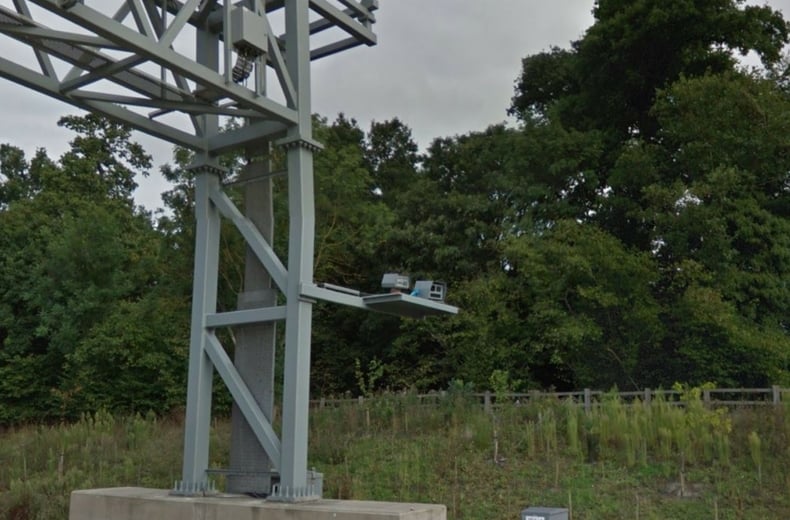
Sporting a rather intimidating acronym of a name, the HADECS 3, which stands for Highways Agency Digital Enforcement Camera System 3, is the latest widely-used piece of technology in motorway speed cameras.
The cameras are frequently used on smart motorways to enforce variable speed limits and as a result are sometimes called variable speed cameras (differentiating them from SPECS average speed cameras).
These systems are much harder to spot than older types of camera: they are often mounted on poles at the side of the motorway, and are largely painted in grey: only the camera units themselves sometimes receive yellow markings.
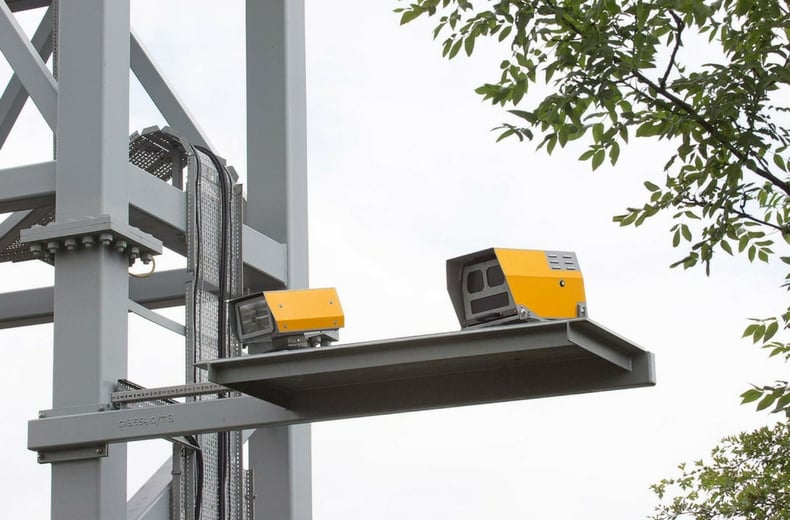
Although they are positioned at the roadside (for ease of maintenance), they can still cover up to five lanes of a motorway. They are thus much more efficient than older systems. The dual radar system is effective in all weathers, and they operate fully digitally for fast processing of speeding penalties.
Many have dubbed the HADECS 3 as the 'stealth speed camera' for its somewhat cloaked appearance, but there will be signs on the road warning drivers of these speed cameras. A HADECS 3 system is made up of the camera unit itself, and an additional ‘external aspect verification' (EAV) structure located in advance of the camera.
This system, comprising three or four individual small camera units, captures speed limits displayed on variable speed limit gantry signs, automatically adjusting the HADECS 3 accordingly, allowing this system to operate in real time.
SPECS
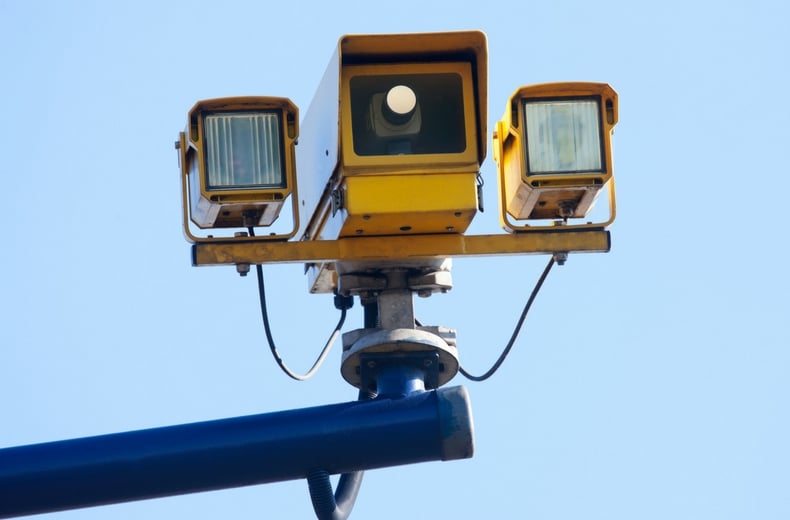
SPECS cameras are also known as average speed cameras. They are are almost always found through motorway roadworks and are equipped with ANPR (Automatic Number Plate Reading) technology and infra-red illuminators, allowing them to work in all conditions, 24 hours a day.
A SPECS setup, which is often painted in bright yellow, is made up of video cameras in at least two locations, a minimum of 0.2km apart. Each camera records a date and time stamp, a computer then works out the average speed, with the ANPR and photographic evidence allowing a speeding penalty to be issued.
Many consider SPECS cameras to be more effective in managing speed as they do not capture speed at an individual location, but average out speed between the two camera zones, meaning drivers are obliged to maintain speed limits over much longer distances.
That's why SPECS cameras are almost always found through motorway roadworks. The SPECS name is derived from the company that makes them – Speed Check Services Limited. The same firm that makes SPECS also offers an alternative average speed camera system called Vector.
These are detected by bright yellow poles and cameras, with what appears to be a stylised ‘M' symbol mounted in a roundel on the arm of the pole. They are rare on motorways though: they are usually found on bidirectional roads or dual carriageways.
Highways England ANPR
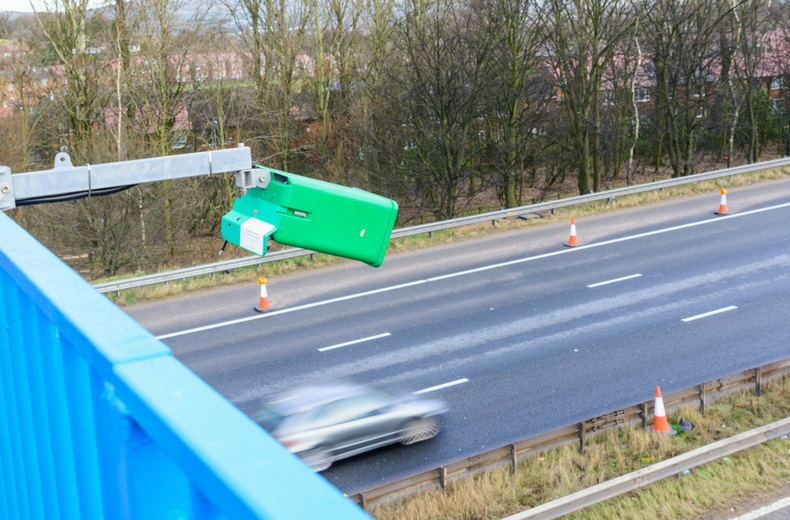
Highways England uses 1,100 ANPR cameras across the UK's motorway and trunk road network to monitor traffic flow and provide estimated journey times across the network. While they ‘read' a vehicle's number plate, the data is instantly converted into non-unique reference numbers, known as ‘hashing'.
This makes it impossible for Highways England to trace a particular vehicle using its network of ANPR cameras. The bright green cameras record around 14 million ‘tags' a day, passing this information onto the National Traffic Operations Centre in five-minute intervals. The data is not passed on to the police, and it's impossible to identify specific vehicles.
TrafficMaster traffic monitoring cameras
Another type of camera sometimes seen on motorways is painted or finished in dark blue. These are operated by the traffic-monitoring company TrafficMaster, and are not used to detect speeding motorists, but simply observe traffic.
Traffic flow speeds are broadcast from the units and used to detect traffic jams. The information is often used in radio traffic alert bulletins – received by pressing the ‘TA' or ‘TP' button on your car stereo – and sometimes by in-car sat nav systems. Again, the data is not passed onto police, and although the system works by detecting vehicle registration plates, the data is encrypted so individual cars cannot be detected.


